A makeup sponge and a foundation brush can work with the same base product and leave noticeably different finishes. Neither tool is automatically better. The useful choice depends on how much coverage you want, how quickly you apply makeup, and how often you are willing to wash the tool.
A sponge softens edges
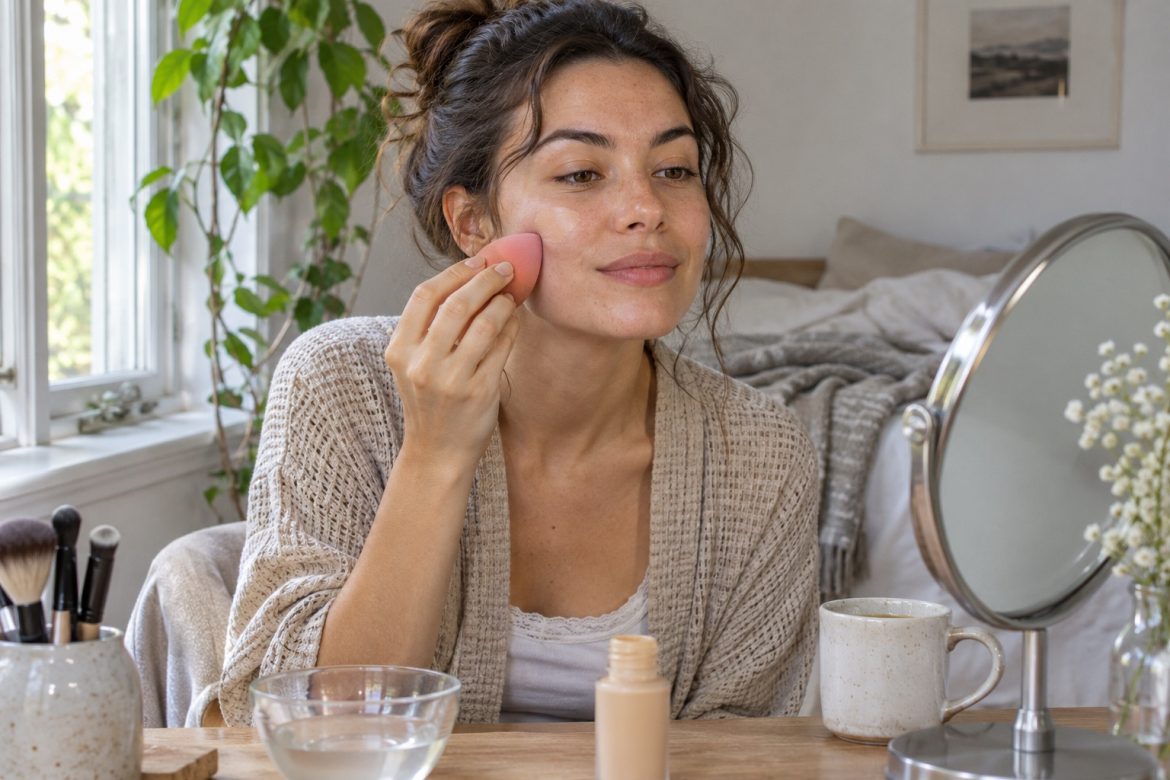
A damp sponge presses product into the skin and can create a thin, blended finish. It is helpful when foundation looks heavy around the nose or when you want to soften cream blush and concealer without adding more product.
Wet the sponge with clean water, squeeze it thoroughly, then press it in a clean towel. It should feel expanded and damp, not drip onto the face. Use bouncing motions rather than dragging the surface across the skin.
A brush keeps more coverage
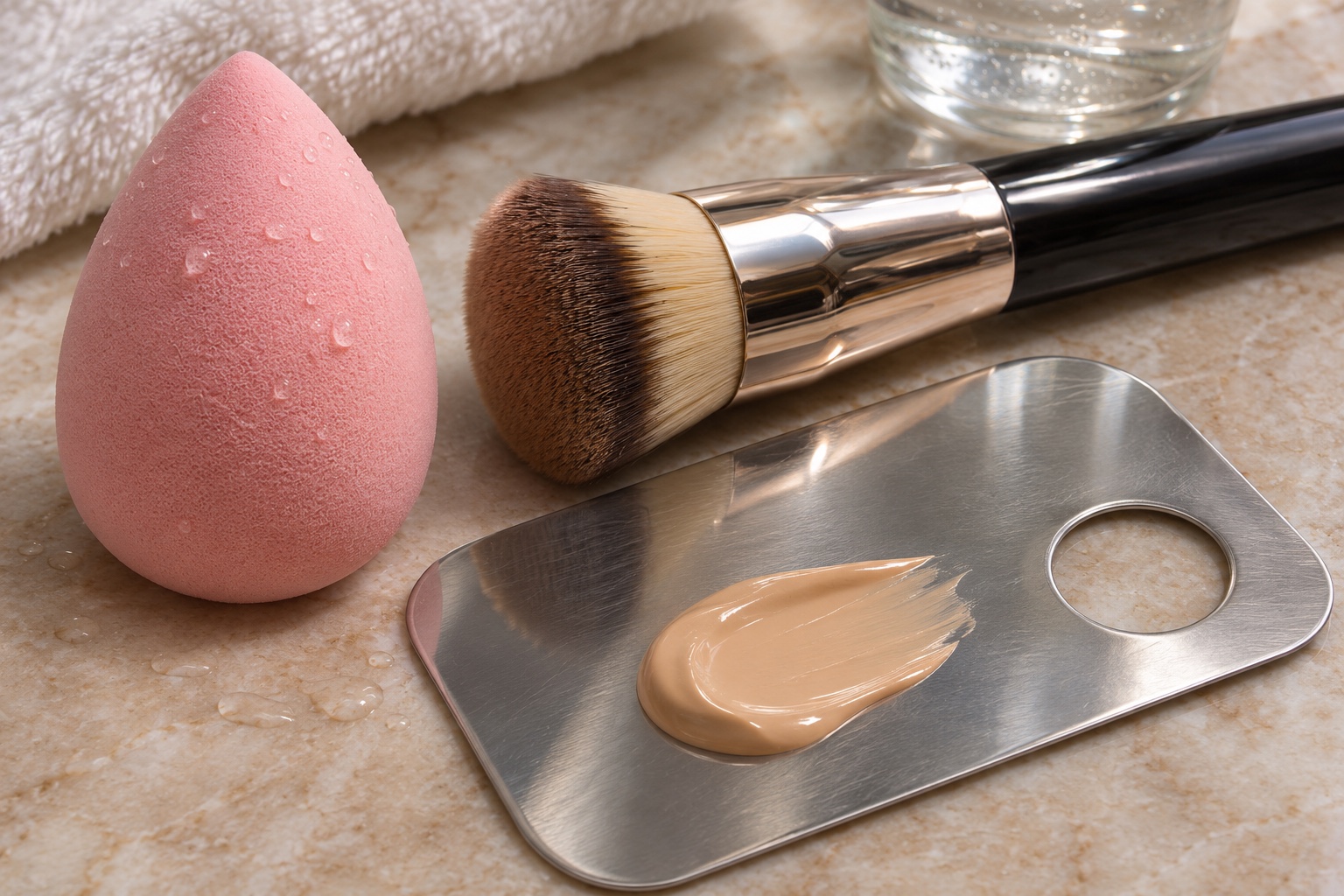
A dense brush spreads liquid or cream foundation with less absorption, which can preserve coverage. Start with a small amount and work in thin sections. Short stippling motions reduce streaks, while a final light sweep can blend the edges.
Brush shape changes the experience. A flat top feels controlled on larger areas, while a smaller rounded brush reaches around the nose and under the eyes. If your brush leaves lines, use less product or finish with a clean sponge.
Cleaning may decide the winner
Sponges need frequent washing and must dry completely in open air. A closed makeup bag can trap moisture. Brushes also need regular cleaning, but a small rotation lets one dry while another is in use.
The FDA advises keeping cosmetic applicators and containers clean and not sharing makeup. Replace a sponge that tears, smells unusual, stays stained after washing, or no longer dries properly.
If you are unsure, use the brush for placement and the sponge for the final blend. After a week, one tool will probably be doing most of the work. That is the one worth keeping within reach.