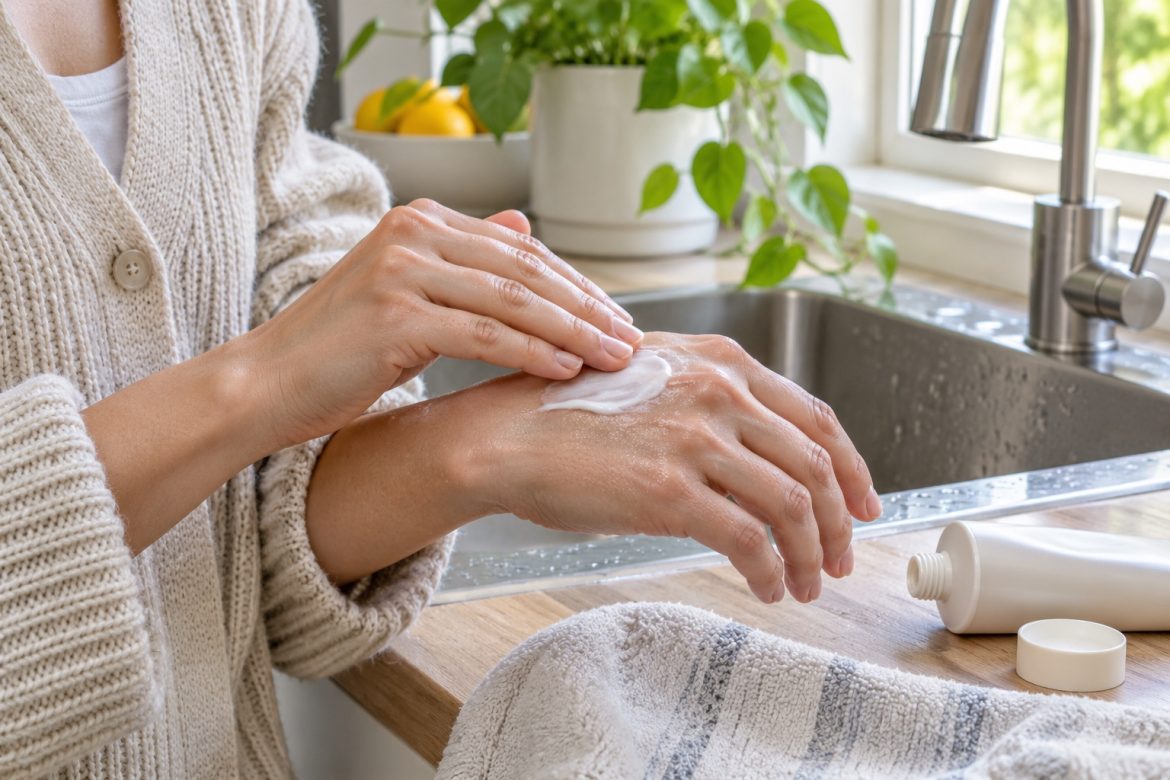
Hand care works best when the product is already where your hands become dry. One cream beside the sink and a smaller tube in your bag can be more useful than a collection stored in a bedroom drawer.
Moisturize after washing
Dry your hands with a clean towel but leave them slightly damp, then apply cream over the backs, palms, fingertips, and around the nails. The American Academy of Dermatology recommends applying hand cream or ointment after handwashing to help prevent and relieve dryness.
A pump lotion feels quick during the day. A thicker cream or ointment may suit chapped areas or nighttime use. If fragrance or dye bothers your skin, look for products labeled fragrance-free and dye-free.

Protect hands during wet work
Dishwashing, cleaning, and gardening can keep the skin wet or expose it to detergents and friction. Use suitable gloves and remove them when the job is finished. If moisture collects inside, let the gloves dry before wearing them again.
Cold weather can also make hands feel rough. A pair of outdoor gloves reduces direct exposure to cold, dry air. Keep them near the door so they become part of leaving the house.
Choose containers for the location
A stable tube or pump works beside a sink. A secure cap matters inside a handbag. For a desk, choose a texture that absorbs comfortably before you return to a keyboard or paperwork.
Use the cream you already own for a week before buying another formula. Put a small reminder near the soap dispenser if you keep forgetting the next step. This small placement change often helps. If the product stings, smells different, or has changed texture, stop using it. Seek medical advice for deep cracks, bleeding, persistent rash, or pain. Good hand care is mostly placement and repetition, not a complicated nightly ritual.